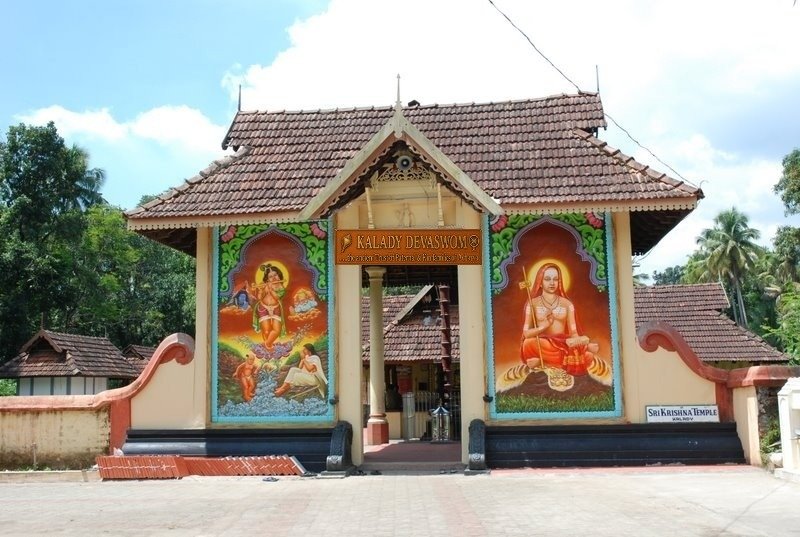
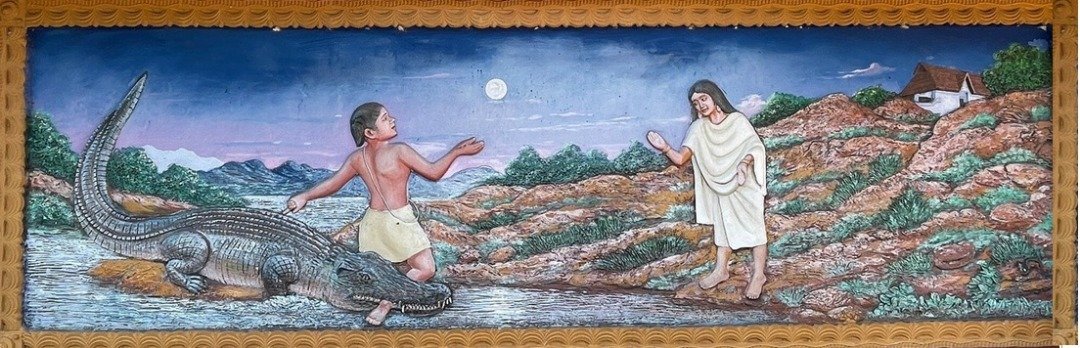
Kalady, the birthplace of Ādi Śaṅkarāchārya, is a place hallowed by a profound act of filial love. According to the long-preserved tradition, the very name Kalady—meaning “the footprint“—originated from a miracle performed by young Śaṅkara.
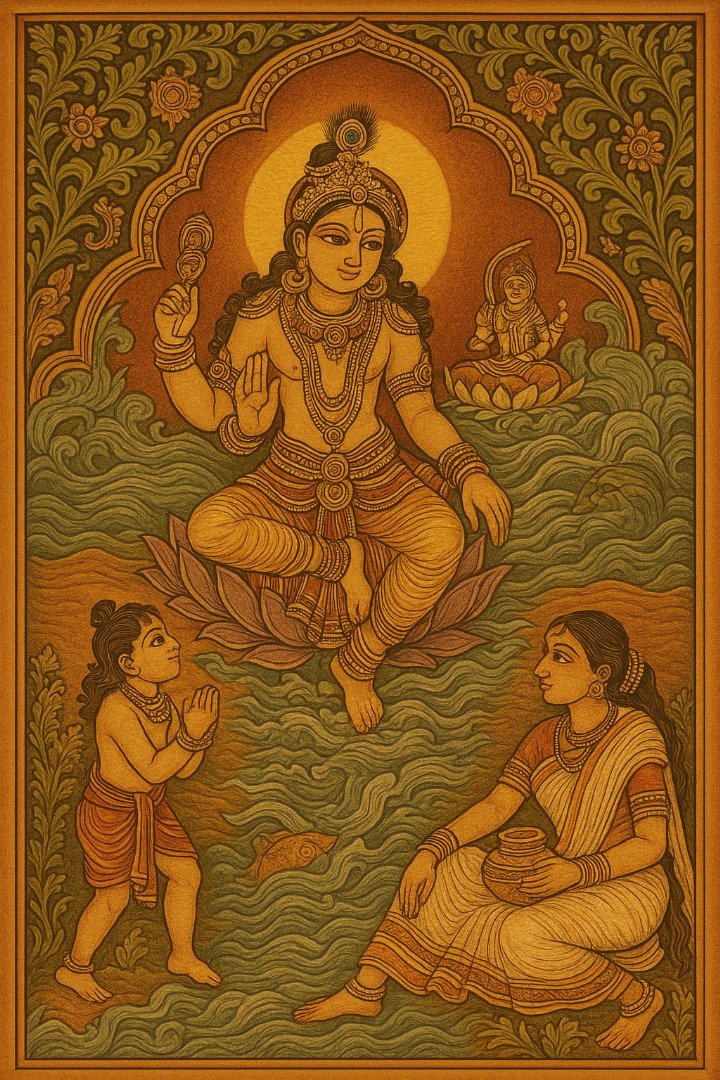
Mother Aryamba for her daily bath to have Darshan of her beloved Krishna -her ancestral deity had to walk 3 Km.s to the revir Poorna (Periyal) . On day mother could not bear the long distance and fainted off. Little boy Śhaṅkara took refuge to his Kula Deva Krishna and prayed, Lord Krishna. Moved by this plea from love of a son to helpless widowed mother, Lord Krishna blessed little Shankara that “Unnii Kalady varayunnidathu Nadi Gathy aavum” [the river will flow where through your feet draw]. Little Shankara drew the line before the very lord who blessed him. The mighty Poorna river [Periyar] miraculously changed its course, following the path Śaṅkara traced upon the ground with his feet, bringing the sacred waters to the family’s doorstep. Thus Shasalam [ Ref:Shivarahasyam] became Kalady and blessed ancestral deity became THRI KALADY APPAN [ Lord of Kalady]
Acharya is believed to have installed four mutts as well in Kerala at Trichur near Vadukkumnathan Temple. Thekkemadom was awarded the Atmeeya Acharya Archaka rights.
To facilitate the Archana, Acharya’s family property was given as Kanam to Thekkemadom. Later, the Mutt was given Kingship rights in recognition of Great Shankara Acharya including rights for taxation and collection from each one villager.
Being Shankarasanketham, it did not permit establishing a church within its sanctum Sanketham which was 3 times demolished off. [KAIPATOOR-CHURCH] -Ref. book ADVAITHATHINTE NATTIL ORU DEIVALAYAM authored by Rev. Fr. Sebastaian Poonolly published by CMI .
After Independence, the Landholders of KALADY, who were subjected to double taxation – to the Government and to Thekkemadom- gave an application to Subject committee. This was later culminated as Act 15 of 1982 by Kerala Legislative assembly abolishing (Raja-bhogam) Taxation rights.
The kind of royal power which marked the divine presence of Shankara as SANKETHAM is now extinct from the entire scene of KALADY and the name THEKKEMADOM is not even known to the natives.
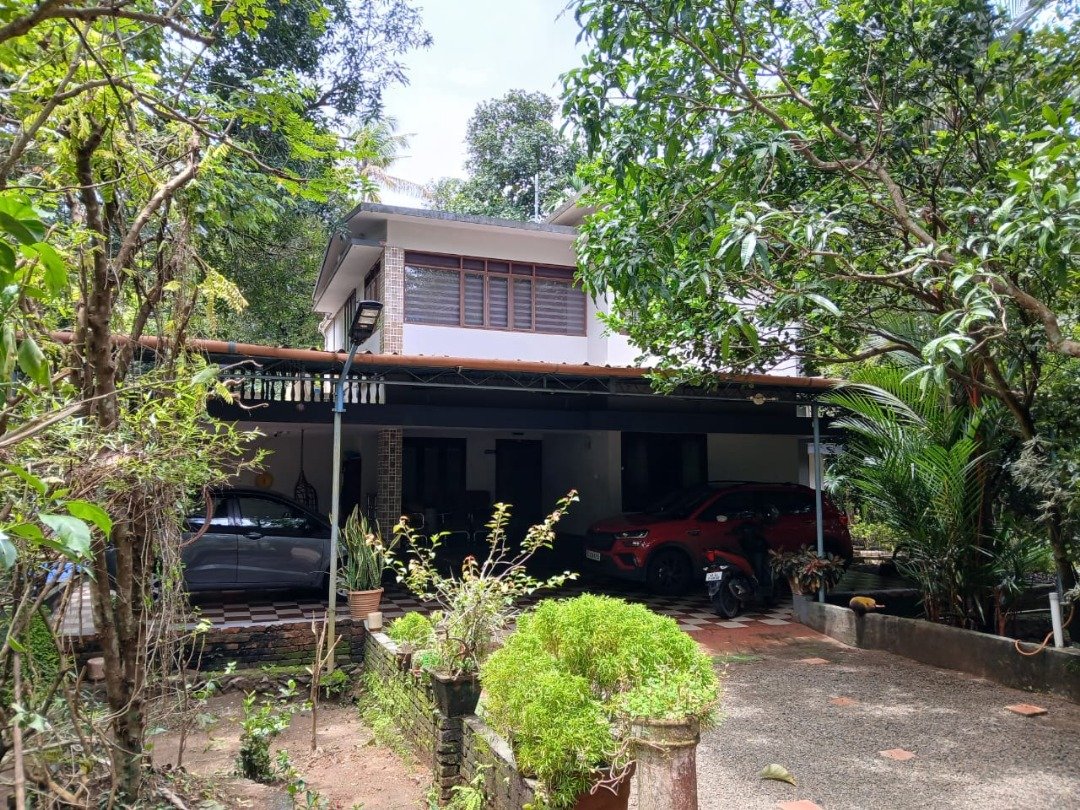
The palace of Thekkemadom is now the Vedic Patsala run by Sri Sringeri Sarada Peetam under a renewable lease of 25 years each.
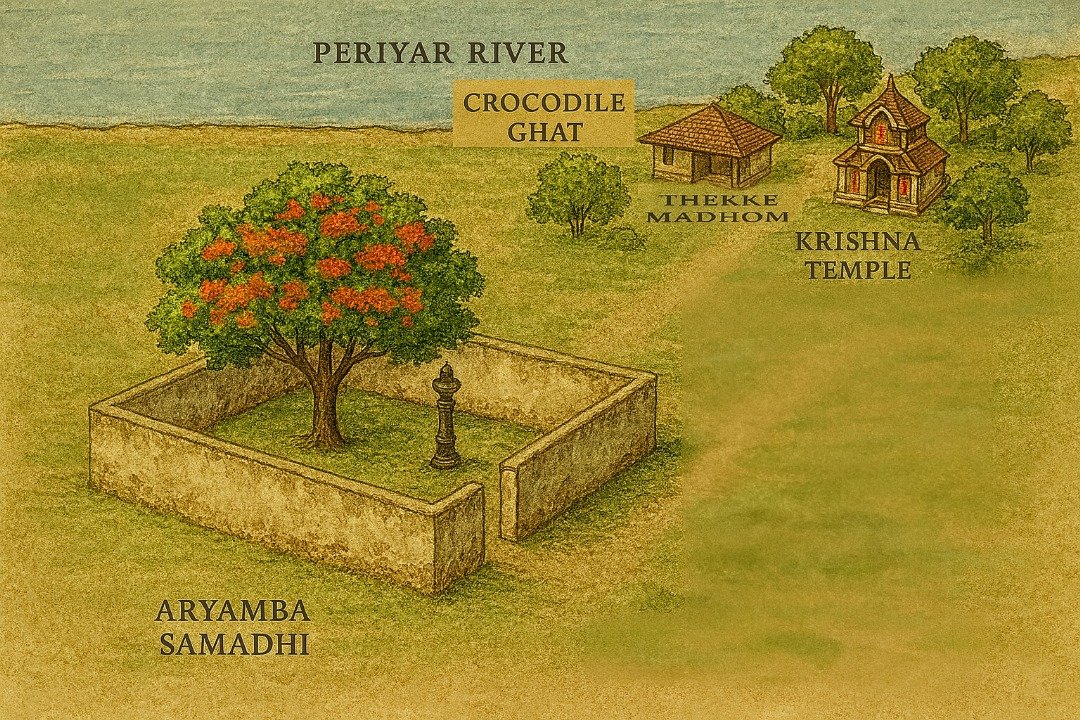
The Ashoka Tree under which the mortal remains of mother Aryamba was deposited got felled off and cut sized, the protection wall remained over centuries got erased and the helpless Atma of mother Aryamba was refused the solace and warmth of a ritual lamp from own family which got curtailed by Kingship rights.
From open nature under the Uthama Vruksham Ashoka Tree the helpless Atma is locked in within a cement structure tomb within the temple complex.